
The Complete Guide to Renovating Your NYC Co-op or Condo in 2026: Permits, Boards, Costs and Timelines
- Richard Golding
- Feb 6
- 16 min read

Why I Wrote This Guide
I've been renovating apartments in New York City for over 20 years. In that time I've filed hundreds of DOB permits, sat through more co-op board meetings than I can count, and watched homeowners lose thousands of dollars and months of their lives to problems that were entirely preventable.
The thing that still surprises me is how little information is available to the people who need it most. You can find a hundred articles about kitchen countertop trends. Try finding one that explains the actual difference between an ALT1 and ALT2 permit, or what happens when your co-op board rejects your alteration agreement because your architect forgot the Waiver of Subrogation rider. Good luck.
So I wrote the guide I wish every one of my clients had read before picking up the phone. This is everything you need to know about renovating a co-op or condo apartment in New York City in 2026. Not the simplified version. Not the version that makes it sound easy. The real version, from someone who does this every single day.
If you're planning a renovation anywhere in Manhattan, Brooklyn, Staten Island, Queens or the Bronx, bookmark this page. You're going to come back to it.
Before You Do Anything: Understand What Kind of Home You're Renovating
This sounds obvious, but the distinction between a co-op and a condo changes almost everything about how your renovation will unfold. I've seen homeowners three weeks into planning discover that their building has restrictions they never anticipated, and suddenly the timeline, the budget and sometimes the entire design has to change.
If you own a co-op, you don't technically own your apartment. You own shares in a corporation that owns the building, and the corporation grants you a proprietary lease to occupy your unit. That lease contains renovation restrictions, and the co-op board has significant authority over what you can and cannot do to your space. Some boards are reasonable. Some are not. But all of them require a formal alteration agreement before any work begins.
If you own a condo, you own the interior of your unit outright. Condo boards have less control than co-op boards, but they still enforce house rules, require insurance documentation and often impose construction guidelines around noise, debris removal and elevator usage. Don't assume that owning a condo means you can skip the approval process.
If you live in a rent-stabilized apartment, the renovation landscape is entirely different. Permanent improvements can affect legal rent calculations, and any work involving licensed trades requires coordination with HPD. I've written separately about this topic because it deserves its own deep dive, but the short version is: if you're a tenant in a rent-stabilized unit, consult a professional before changing so much as a faucet.
The building type dictates the approval process, the insurance requirements, the timeline and often the budget. Get this right first.
The Alteration Agreement: The Step Most People Don't See Coming

Here is the single biggest source of delays and frustration in NYC apartment renovations, and it has nothing to do with the Department of Buildings.
Before your contractor swings a hammer, before your architect files a single permit, you need a signed alteration agreement from your building. In co-ops, this is almost always required. In condos, it depends on the building, but most managed condos have some version of this process.
An alteration agreement is essentially a contract between you and the building that outlines the scope of your renovation, the protections in place for the building and your neighbors, and the financial guarantees you're providing in case something goes wrong. It typically requires the following.
Architectural plans. Your registered architect or professional engineer prepares drawings showing the proposed scope of work. These plans need to be detailed enough for the board and their consulting architect or engineer to review. If your plans are vague or incomplete, expect them to be sent back with questions, which adds weeks.
Insurance certificates. Your contractor must carry general liability insurance and workers' compensation coverage. Most buildings require minimum coverage of one to two million dollars in general liability, and many require your contractor to name the building, the managing agent and sometimes individual board members as additional insureds. The specific language matters. I've seen projects delayed because a certificate was missing a Waiver of Subrogation endorsement or because the additional insured language didn't match the building's template exactly.
A security deposit or escrow. This is the part that catches people off guard. Most buildings require a refundable deposit ranging from $5,000 to $20,000 or more, held in escrow for the duration of construction and sometimes for a period afterward. This money covers potential damage to common areas, hallways, elevators and neighboring units. You get it back when the work is complete and the building confirms no damage occurred. But until then, that money is locked up.
Alteration agreement fees. In addition to the security deposit, most buildings charge a non-refundable processing fee for reviewing your application. These fees typically range from $1,000 to $5,000 depending on the building and the scope of the project. Some buildings also charge a daily or weekly fee for elevator usage during construction.
A construction schedule. The board wants to know when work will start, when it will end, what hours your crew will be working and how materials and debris will be transported through the building. Most NYC buildings restrict construction to weekdays between 8 or 9 in the morning and 4 or 5 in the afternoon. Some buildings blackout certain weeks around holidays.
The entire alteration agreement process typically takes 4 to 8 weeks from submission to approval. If your plans require revisions, if the board meets monthly rather than weekly, or if there are questions about insurance language, it can take longer.
My advice: start this process before you finalize your design. I've watched clients fall in love with a layout that their building's wet/dry restrictions made impossible. Some co-op boards prevent moving kitchen sinks or adding bathrooms in certain locations because of plumbing stack limitations. Find out what your building allows before you spend weeks designing around something that won't get approved.
NYC Department of Buildings Permits: ALT1, ALT2 and ALT3 Explained

Once your building approves the alteration agreement, the next step is filing for permits with the New York City Department of Buildings. This is where the regulatory complexity of renovating in this city really shows itself.
The DOB classifies renovation work into three permit categories, and the distinction between them affects your timeline, your costs and the level of professional oversight required.
Alteration Type 1 (ALT1)
An ALT1 permit is required when your renovation changes the use, occupancy or egress of the building. In residential terms, this means projects like combining two apartments into one, converting a commercial space to residential, adding a new means of egress, or changing the number of dwelling units in a building.
ALT1 projects are the most complex from a permitting standpoint. They require full plan review by the DOB, which means an examiner reviews every detail of your architect's submission for compliance with building code, zoning resolution and all applicable laws. This review process can take 8 to 16 weeks depending on the complexity and the current DOB backlog.
ALT1 permits also require a registered architect or professional engineer to file the plans, and the project must comply with the most current building code in its entirety. This sometimes triggers upgrades beyond the scope of the renovation itself, like fire alarm system modifications or accessibility improvements that the current code requires but the building predates.
If you're combining apartments, plan on ALT1. If you're changing room counts in a way that affects certificate of occupancy, plan on ALT1. Everything else is likely ALT2 or ALT3.
Alteration Type 2 (ALT2)
This is the permit category that covers the vast majority of apartment renovations in New York City. An ALT2 permit is required when your project involves multiple types of work (plumbing, electrical, general construction) but does not change the building's use, occupancy or egress.
Practically speaking, if you're doing a kitchen renovation that involves moving plumbing, updating electrical and removing a non-load-bearing wall, that's ALT2 territory. Bathroom renovations with new plumbing layouts, gut renovations that maintain the same apartment configuration, and any project requiring work from two or more licensed trades all fall under ALT2.
ALT2 permits can be filed through two paths. The standard path involves DOB plan review, which takes four to eight weeks. The faster path is professional certification, where your architect or engineer certifies that the plans comply with all applicable codes. Professional certification can reduce the timeline to 2 to 3 weeks because the DOB only performs a zoning check after the permit is issued rather than a full plan examination upfront.
Professional certification comes with a tradeoff. If the DOB audits the project (which they do randomly) and finds non-compliance, your architect or engineer faces professional liability. This means most architects are careful about what they'll certify, which is actually a good thing for you as the homeowner.
Alteration Type 3 (ALT3)
ALT3 covers minor work involving a single type of trade. Replacing a water heater, adding a few electrical outlets in the same room, or minor plumbing repairs that don't change the layout would fall under ALT3. These permits are the simplest to obtain and usually process within one to two weeks.
Most apartment renovations that go beyond purely cosmetic updates will require at least an ALT2. If a contractor tells you that your full kitchen and bathroom renovation doesn't need permits, that is a serious red flag. Walk away.
What Happens When You Skip Permits
I want to be very direct about this because I've seen the consequences too many times. Working without permits in New York City can result in DOB stop work orders that halt your project immediately, fines ranging from $2,500 to $25,000 per violation, daily penalties of $500 to $1,000 until the violation is cured, ECB summons with additional civil penalties, property liens that prevent you from selling or refinancing, and after-the-fact permit fees that cost two to three times the original permit cost.
Beyond the financial penalties, unpermitted work can void your homeowner's insurance, create liability issues if someone is injured, and cause enormous problems when you eventually try to sell. A buyer's attorney or a bank's appraiser will check DOB records, and open violations or unpermitted alterations will surface.
The permit process costs money and takes time. But it's not optional. It's the cost of doing business in New York City, and any contractor worth hiring understands that.
The Landmark Question: Does Your Building Fall Under LPC Jurisdiction?
Roughly one in five Manhattan properties carries a landmark designation. If your building is individually landmarked or sits within a historic district, you'll need to navigate an additional layer of approval from the Landmarks Preservation Commission before beginning any renovation that affects the building's exterior or, in some cases, interior features visible from a public way.
LPC approval is required for changes to exterior materials, windows facing the street, storefront configurations, rooftop additions visible from public view, and certain signage. For most interior apartment renovations, LPC involvement is limited. But if your project involves window replacement on a street-facing facade, exterior HVAC equipment, or any modification to an exterior wall, you'll need LPC sign-off before the DOB will issue your permit.
The LPC process adds time. A standard application for a Certificate of No Effect (meaning the proposed work will have no effect on the landmark features) takes approximately 4 to 6 weeks. More complex applications that require a hearing before the commission can take several months.
If you're in a landmarked building, the key is identifying LPC requirements early. Your architect should know immediately whether your project triggers LPC review. If they don't raise this question during the first meeting, find a different architect.
Some of the most beautiful renovations I've completed have been in landmarked buildings. Pre-war co-ops in Greenwich Village, brownstones in Brooklyn Heights, apartments on the Upper West Side in historic districts. The constraints are real, but they're navigable when you plan for them from the beginning rather than discovering them mid-project.
Pre-War vs. Post-War: Why Your Building's Age Changes Everything
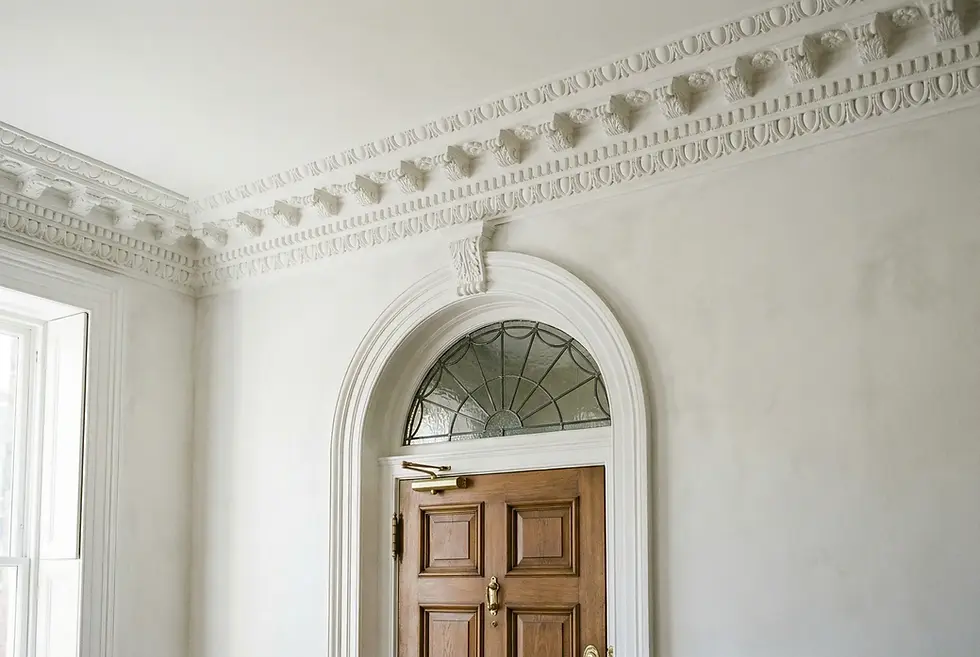
I've renovated apartments in buildings from the 1890s through the 2020s, and I can tell you that the year a building was constructed tells me more about the challenges ahead than almost any other single fact.
Pre-War Buildings (Before 1940)
These are the buildings New Yorkers romanticize, and for good reason. High ceilings, thick plaster walls, solid construction, gracious layouts. They're also the buildings that present the most complex renovation challenges.
Asbestos. If your building was constructed before April 1987, any renovation involving demolition requires an Asbestos Assessment Report (the ACP5 form) before the DOB will approve your permit. A licensed asbestos investigator must test samples of materials that will be disturbed, including floor tiles, pipe insulation, plaster and joint compound. If asbestos is found, certified abatement must be completed before construction begins. This adds $3,000 to $15,000 to your budget and one to three weeks to your timeline depending on the extent.
Lead paint. Buildings constructed before 1978 almost certainly contain lead paint somewhere. EPA's Renovation, Repair and Painting (RRP) rule requires that contractors working in these buildings be Lead Safe Certified. Your contractor should be following lead-safe work practices including containment, HEPA vacuuming and proper disposal. This isn't optional and it isn't a suggestion. It's federal law, and it exists because lead dust from renovation work is genuinely dangerous, especially in homes with children.
Plumbing. Pre-war buildings typically have cast iron drain lines and sometimes galvanized steel supply pipes. Cast iron has a lifespan, and in buildings approaching a hundred years old, those pipes are often corroded, cracked or partially collapsed. When we open walls in pre-war apartments, we frequently discover plumbing conditions that require immediate attention. Transitioning from cast iron to PVC or from galvanized to copper adds cost, but ignoring deteriorated plumbing during a renovation is a mistake you'll pay for later.
Electrical. Some pre-war buildings still have remnants of knob and tube wiring or early conduit systems that don't meet current code. If your renovation involves electrical work (and most do), expect your electrician to find conditions that require upgrades beyond the original scope. Budget a 10 to 15 percent contingency specifically for electrical surprises in pre-war buildings.
Walls and structure. Pre-war plaster walls are not drywall. They're three-coat plaster over wood lath or metal lath, and they behave differently when you cut into them, hang things on them or try to run new wiring through them. Floors may not be level. Walls may not be plumb. Corners may not be square. None of this is a problem for an experienced NYC contractor, but it means that off-the-shelf solutions designed for modern, square construction sometimes don't fit. Custom work costs more, and in pre-war buildings, more of the work is custom.
Post-War Buildings (1945 to 1980)
Post-war buildings were constructed quickly and economically during the housing boom that followed World War II. They tend to have lower ceilings (eight feet is standard), thinner walls, simpler layouts and less architectural detail. From a renovation standpoint, they're generally more predictable than pre-war buildings. Walls are usually drywall or concrete block, plumbing is more standardized and electrical systems are closer to current code.
The main challenges in post-war buildings are space efficiency (layouts were designed for a different era of living) and material quality (some post-war construction used materials that haven't aged well). Asbestos is still a concern in buildings from this era, particularly in floor tiles, popcorn ceilings and pipe insulation.
New Construction (Post-2000)
Modern buildings present the fewest renovation surprises but come with their own considerations. Condo boards in newer buildings sometimes have stricter aesthetic guidelines. Mechanical systems may be integrated in ways that limit modification (for example, central HVAC systems that can't easily accommodate a kitchen hood upgrade). And because the construction is relatively recent, there's less urgency for the systems-level upgrades that older buildings often need.
The point is this: your building's age should inform your renovation budget, your timeline expectations and your choice of contractor. A firm that specializes in gut-renovating new construction condos may not have the institutional knowledge to navigate a pre-war co-op renovation, and vice versa.
What Does a Renovation Actually Cost in New York City?
This is the question everyone asks first, and I'm not going to dodge it. Too many contractors in this city avoid publishing real numbers because they're afraid of scaring people off or being held to estimates that don't account for the unpredictable nature of NYC renovation. I'd rather give you honest ranges so you can plan realistically.
The numbers below reflect mid-quality to high-quality finishes, licensed and insured contractors, proper DOB permits and inspections, and projects completed legally and to code. If someone quotes you dramatically less than these ranges, ask what they're leaving out.
Kitchen Renovation

A kitchen renovation in New York City typically runs $50,000 to $150,000 or more depending on the scope. A cosmetic refresh with new cabinet fronts, countertops and appliances might come in at the lower end. A full gut renovation with custom cabinetry, stone countertops, professional-grade appliances and layout changes will push toward the higher end. Our average kitchen project at Metro Contractors runs $95,000 to $115,000.
Bathroom Renovation
Bathroom renovations in NYC average $40,000 to $60,000 for a full renovation with mid-range to high-end finishes. Cosmetic updates (new tile, fixtures, vanity) can sometimes be accomplished for $15,000 to $25,000. Luxury bathrooms with custom tile work, heated floors, frameless glass and premium fixtures routinely exceed $60,000.
Full Apartment Gut Renovation
A complete gut renovation (taking the apartment down to studs and rebuilding everything) runs $150 to $400 per square foot in New York City. For a 1,000 square foot apartment, that translates to $150,000 to $400,000 depending on the quality of finishes and the complexity of the work. High-end gut renovations in Manhattan co-ops can exceed $500 per square foot when premium materials and extensive custom work are involved.
Apartment Combination
Combining two apartments is among the most complex residential projects in NYC. Beyond the renovation costs themselves (which follow the per-square-foot ranges above for the combined space), apartment combinations require ALT1 permits, structural engineering for wall removals, and extensive coordination with the building. Budget an additional $30,000 to $75,000 in soft costs (architecture, engineering, permits, filing fees) on top of the construction budget.
The Hidden Costs Nobody Tells You About
These are the line items that blow budgets when people don't plan for them.
Permit and filing fees: $2,000 to $10,000 depending on project scope. Includes DOB filing fees, professional certification fees and inspection costs.
Alteration agreement deposits: $5,000 to $20,000 (refundable, but tied up for months).
Board processing fees: $1,000 to $5,000 (non-refundable).
Asbestos testing and abatement: $1,500 to $15,000 if present.
Building protection: Many buildings require hallway, elevator and lobby protection during construction. Materials and installation run $1,000 to $5,000.
Debris removal: In a city where you can't just rent a dumpster and park it on the street, debris removal is a real cost. Expect $3,000 to $8,000 for a gut renovation.
Architect and engineering fees: For projects requiring DOB filing, professional fees typically run 8 to 15 percent of the construction budget.
Contingency: I tell every client to set aside 15 to 20 percent of the construction budget for unforeseen conditions. In pre-war buildings, I recommend 20 percent. This isn't pessimism. It's experience. Something will come up that nobody could have predicted, and having the financial cushion to address it without panic is the difference between a stressful project and a manageable one.
Choosing the Right Contractor for a NYC Renovation
I'm biased here, obviously. But I'm going to give you the honest criteria I'd use if I were hiring someone to renovate my own apartment.
Verify their NYC license. For one-to-three family homes, your contractor needs a Home Improvement Contractor (HIC) license. For apartment buildings, they need a general contractor license. You can verify both through the DOB's online portal. Do this. It takes five minutes and it eliminates a surprising number of unqualified operators.
Check their DOB history. Also available online through DOB NOW. Look for open violations, stop-work orders or a pattern of complaints. A clean DOB record doesn't guarantee a great contractor, but a dirty one tells you everything you need to know.
Confirm insurance. General liability and workers' compensation, both current, both verifiable. Your building will require this documentation as part of the alteration agreement. If a contractor can't produce insurance certificates immediately upon request, move on.
Ask about their experience with your building type. Renovating a pre-war co-op in Park Slope requires different expertise than renovating a new-construction condo in Williamsburg. Ask specifically about projects they've completed in buildings similar to yours, in the same borough, with the same building management style. An experienced NYC contractor knows which buildings are easy to work with and which require extra patience and preparation.
Get a detailed scope of work. A legitimate estimate should itemize every component of the project, from demolition through final punch list. Lump-sum bids with no detail make it impossible to compare contractors or hold anyone accountable for what was promised versus what was delivered.
Talk to recent clients. Not references from five years ago. Recent ones. Ask them about communication, timeline accuracy, how change orders were handled and whether the final cost matched the estimate. The answers will tell you more than any portfolio photo.
The Renovation Timeline: A Realistic Month-by-Month View
I'm going to lay out what a typical full apartment renovation looks like in terms of timeline, because I think the biggest source of frustration for homeowners isn't the cost or the complexity. It's the expectation gap. When someone expects a four-month process and it takes seven, they feel like something went wrong even if everything went according to plan for New York City.
Months 1 through 2: Planning and Approvals. Architectural design, engineering review, alteration agreement preparation and submission, board review. If your building's board meets monthly, a single round of questions can add 4 weeks.
Month 2 through 3: Permitting. DOB filing, plan review or professional certification, permit issuance. If the DOB examiner raises objections (which is common), your architect responds, and the review cycle adds another two to four weeks.
Month 3: Pre-Construction. Material ordering (custom cabinets can have a 12 to 16 week lead time, so ideally this started during the approval phase), asbestos testing, building protection installation, elevator reservation.
Months 4 through 6: Construction. Demolition, rough plumbing and electrical, inspections, framing, drywall, tile, cabinetry, countertops, finish plumbing and electrical, painting, flooring, final inspections.
Month 6 through 7: Close-Out. Punch list items, final DOB inspections, architect sign-off, building sign-off, security deposit return.
Total: Five to seven months for a full renovation. Kitchen or bathroom only projects can often be completed in three to four months including approvals. Apartment combinations typically take eight to twelve months or longer.
The contractors who promise dramatically shorter timelines are either planning to skip permits, cut corners or simply tell you what you want to hear. None of those serve your interests.
What I Want You to Take Away From This Guide
Renovating in New York City is complicated. I won't pretend otherwise. The regulatory environment, the building politics, the logistics of working in dense urban spaces, the costs. It's a lot.
But it's also the most rewarding work I do. I watch people transform apartments they've lived in for years into spaces that genuinely change how they feel coming home every day. I've seen couples who fought about their kitchen layout end up cooking together for the first time in years. I've watched families reclaim space they didn't know they had.
The key to getting there without losing your mind or your savings is knowledge. Understanding the process, knowing what to expect, building realistic budgets and timelines, and hiring people who've navigated these waters hundreds of times before.
That's what we do at Metro Contractors. We've spent over twenty years learning the institutional knowledge of NYC renovation, from DOB filing protocols to co-op board psychology to the structural quirks of every building era this city has produced. Every one of those years, every one of those projects, is reflected in how we approach your renovation.
If you're thinking about renovating your apartment, I'd love to talk. Consultations are always free, and I personally respond to every inquiry. Even if we're not the right fit for your project, I'll point you in the right direction.
Your apartment should work as hard as you do. Let's make that happen.

Richard Golding is the founder of Metro Contractors LLC, a licensed general contractor specializing in high-end NYC renovations. With over 20 years of experience across Manhattan, Brooklyn, Queens and the Bronx, Richard and his team have completed hundreds of co-op, condo and brownstone renovations. Metro Contractors is fully licensed, insured and bonded in the State of New York.
Have questions about your renovation? Contact Metro Contractors for a free consultation.
Related Articles:
NYC Co-op Alteration Agreements Explained: Fees, Deposits and How to Get Board Approval Faster (coming soon)
Pre-War vs. Post-War Renovation in Manhattan: What Your Contractor Should Tell You Before Demo Day (coming soon)
How Much Does a Renovation Actually Cost in NYC? 2026 Price Ranges by Project Type and Building (coming soon)


Comments